Format: 41 MP4 + 44 PDFs
Release Year : 2026
Course Overview
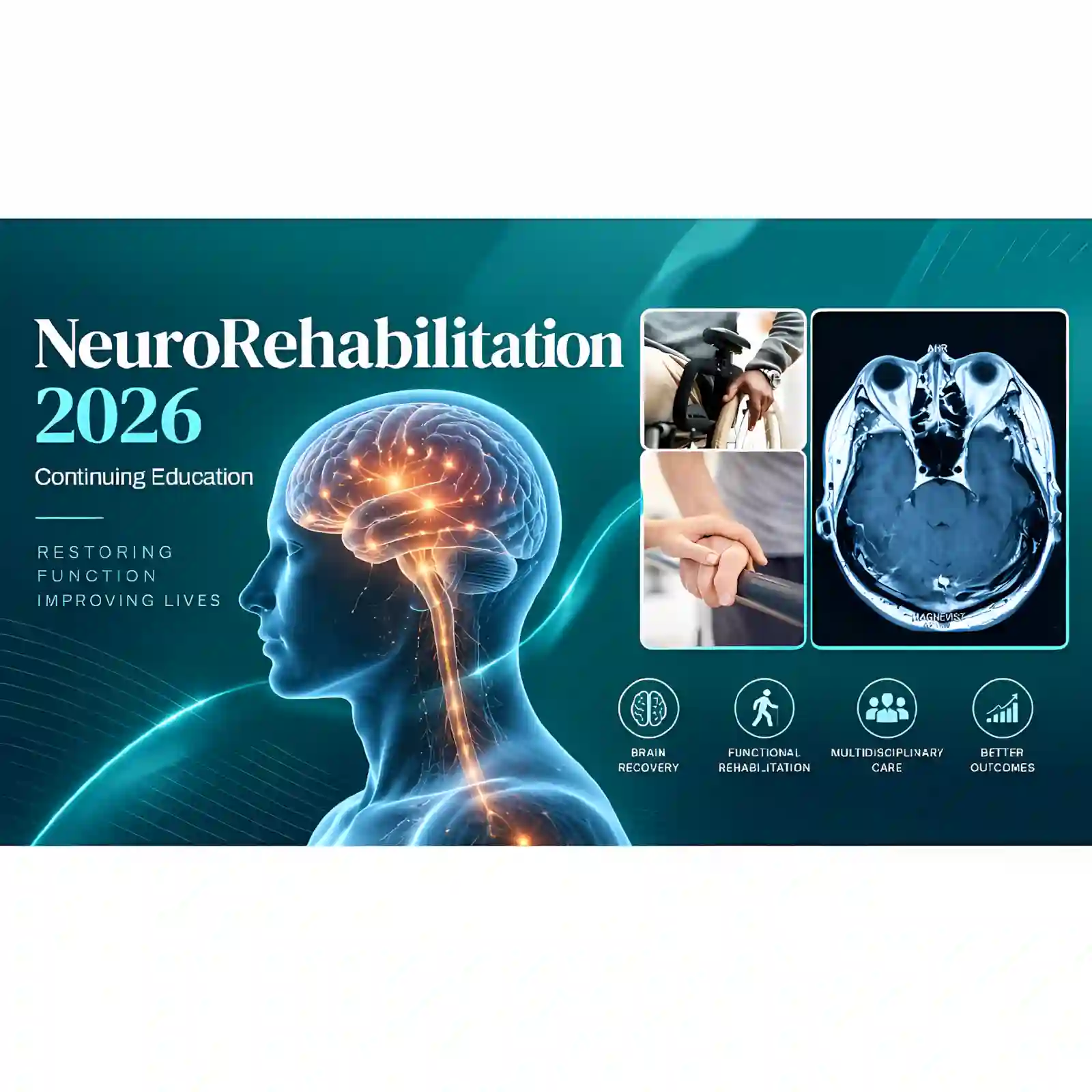
NeuroRehabilitation 2026 is a comprehensive educational program focused on the latest advances in neurological rehabilitation. Through live streaming, electronic Q&A, recorded sessions, and flexible online learning resources, the program provides healthcare professionals with practical, evidence-based updates for improving patient outcomes.
The course addresses emerging treatment options and state-of-the-art clinical interventions for patients with stroke, spinal cord injury (SCI), traumatic brain injury (TBI), and functional and degenerative neurological diseases.
All sessions and concurrent breakouts are recorded and made available through the online course library, allowing registered participants to revisit educational content at their convenience.
Course Highlights
Enhanced and Accelerated Recovery
Explore current best practices and advanced approaches designed to improve and accelerate neurological recovery, including:
- Denervation and surgical procedures for spasticity
- Pharmacological approaches to spasticity management
- Pharmacological options for aggressive behavior following TBI
- Management of pituitary disorders after TBI
- Insight, awareness, and denial in neurorehabilitation
- Advances in the treatment of multiple sclerosis
- Current developments in stroke rehabilitation
- Pediatric traumatic brain injury
- Vestibular rehabilitation following TBI
- Swallowing and dysphagia management
Improving Quality of Life
The program examines strategies and multidisciplinary approaches aimed at improving quality of life for patients and their families, including:
- Vision rehabilitation following stroke
- Patient-caregiver interventions in the intensive care setting
- Women's health considerations in spinal cord injury
- Mild TBI and PTSD in military populations
- Family and caregiver support
- Approaches to obesity in neurorehabilitation
Evolving Treatment Options
Discover emerging therapies and technologies that are shaping the future of neurological rehabilitation:
- Artificial intelligence in neurorehabilitation
- Virtual reality-based rehabilitation treatments
- Forced exercise approaches for Parkinson's disease
- Advances in pharmacological treatment of depression
- Advanced technologies for spinal cord injury rehabilitation
- Emerging treatment strategies and their potential impact on patient outcomes
Expanding Knowledge of Neurological Conditions
The program provides an in-depth review of a wide range of neurological conditions and clinical challenges, supporting informed assessment and treatment decisions.
Key topics include:
- Advanced neuroimaging in traumatic brain injury
- Recovery and outcomes following mild TBI
- The CBI-M framework for TBI classification
- ASIA classification of spinal cord injury
- Functional neurological disorders and post-concussion symptoms
- Chronic traumatic encephalopathy
- Cerebellar cognitive affective syndrome
- Covert consciousness following TBI
- Amyotrophic lateral sclerosis
- Autonomic nervous system dysfunction following TBI
- Withdrawal of life-sustaining treatment
Who Should Attend?
NeuroRehabilitation 2026 is designed for healthcare professionals involved in the evaluation, treatment, and rehabilitation of patients with neurological conditions, including:
- Physicians
- Nurse practitioners (NPs)
- Physician assistants (PAs)
- Physical therapists (PTs)
- Occupational therapists (OTs)
- Speech-language pathologists (SLPs)
- Psychologists
- Other professionals involved in neurological rehabilitation
Learning Objectives
By exploring current evidence, clinical strategies, emerging technologies, and evolving treatment approaches, participants can strengthen their understanding of neurological rehabilitation and apply updated knowledge to clinical decision-making.
The program provides a broad perspective on recovery, functional outcomes, quality of life, rehabilitation technology, pharmacological treatment, neurological assessment, and multidisciplinary patient care.