Program Overview
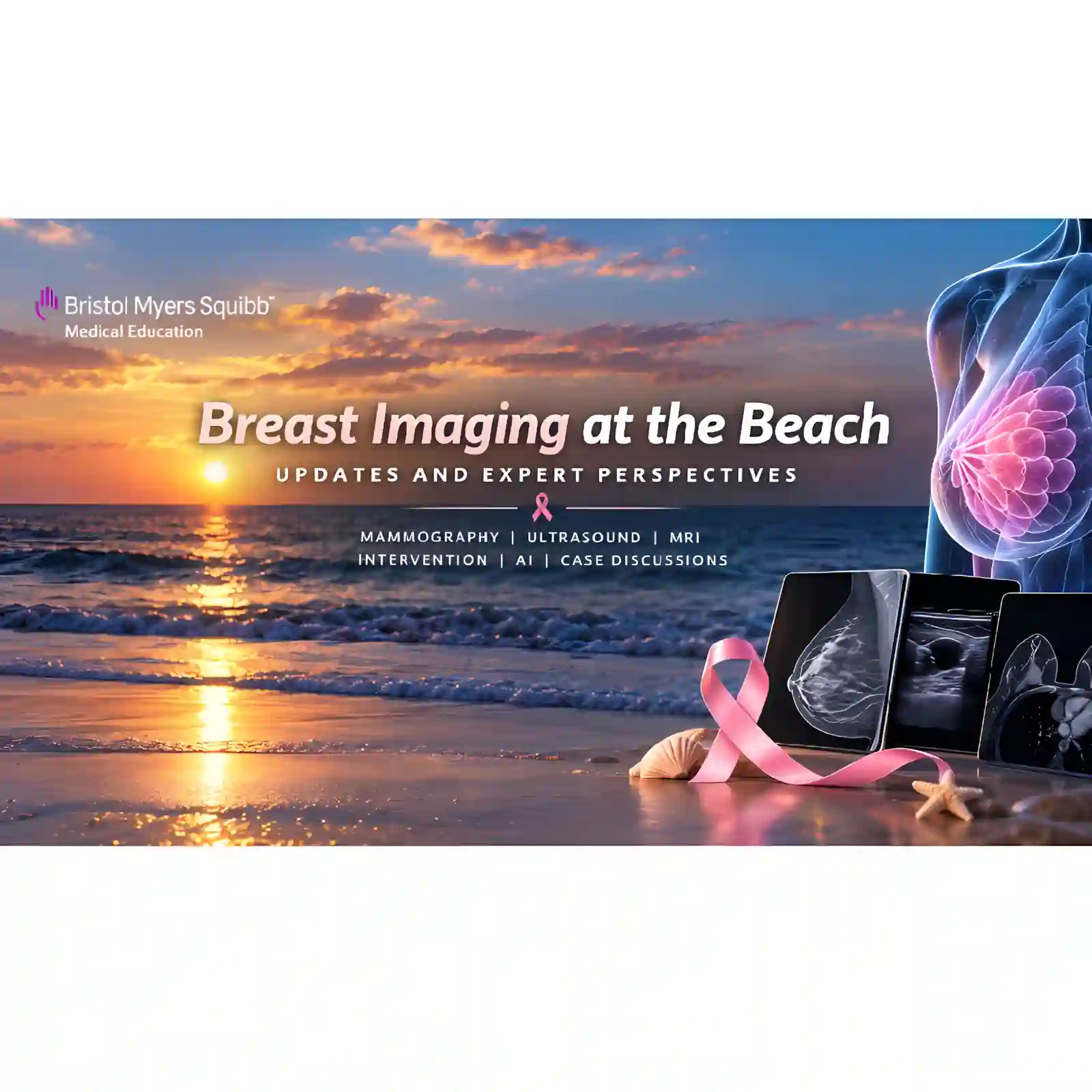
Penn Medicine Breast Imaging at the Beach is a comprehensive educational program focused on the practical challenges and evolving technologies shaping modern breast imaging. The program provides healthcare professionals with strategies to improve image interpretation, diagnostic accuracy, screening performance, and patient outcomes.
A key focus is the integration of advanced imaging modalities, artificial intelligence, precision imaging, and optimized clinical workflows across both screening and diagnostic settings.
The program also addresses important practice management considerations, including financial performance, remote reading workflows, and strategies for improving the overall efficiency and quality of breast imaging services.
Key Program Highlights
Advanced Breast Imaging
The program explores imaging technologies that extend beyond conventional mammography, including:
- Whole-breast ultrasound for supplemental screening
- Contrast-enhanced mammography
- Abbreviated breast MRI
- Advanced mammographic imaging
- Personalized and precision breast imaging
- Emerging imaging technologies for screening and diagnosis
Artificial Intelligence and Deep Learning
Participants will explore the growing role of artificial intelligence and deep learning in breast imaging, including their applications in:
- Mammographic image analysis
- Breast cancer detection
- Breast cancer risk assessment
- Image interpretation
- Screening optimization
- Personalized imaging strategies
Diagnostic Accuracy and Case-Based Learning
Daily case conferences provide a practical opportunity to review breast imaging cases and explore approaches for improving diagnostic accuracy.
The case-based component focuses on:
- Image interpretation
- Challenging breast imaging findings
- Diagnostic decision-making
- Identification of suspicious abnormalities
- Strategies for improving breast imaging outcomes
Image-Guided Breast Biopsy
The program addresses advances in image-guided breast biopsy and the management of high-risk breast lesions. Participants can strengthen their understanding of biopsy techniques, clinical decision-making, and appropriate management strategies for complex findings.
Practice Management
Beyond clinical imaging, the program examines strategies for improving the operational and financial performance of breast imaging practices.
Topics include:
- Optimizing financial outcomes
- Improving clinical performance
- Efficient practice workflows
- Remote reading and teleradiology workflows
- Strategies for balancing quality, efficiency, and patient care
Learning Objectives
After completing the program, participants should be able to:
- Apply strategies to optimize mammographic screening, diagnosis, and screening participation, including approaches for special patient populations.
- Evaluate the evidence and practical considerations surrounding supplemental screening with whole-breast ultrasound, contrast-enhanced mammography, and abbreviated breast MRI.
- Discuss emerging applications of deep learning and artificial intelligence in mammography and breast cancer risk assessment.
- Improve knowledge and skills related to image-guided breast biopsy and the management of high-risk breast lesions.
- Identify strategies for improving the financial performance and operational efficiency of breast imaging practices while maintaining high standards of clinical care.
Who Should Attend?
This program is particularly relevant to healthcare professionals involved in breast imaging, breast cancer screening, diagnosis, and patient management, including:
- Breast imaging radiologists
- Diagnostic radiologists
- Radiology specialists
- Breast surgeons
- Oncologists
- Radiology trainees
- Advanced practice providers
- Healthcare professionals involved in breast cancer screening and diagnosis
Program Value
Penn Medicine Breast Imaging at the Beach combines practical clinical education with emerging advances in imaging technology and practice management. By addressing supplemental screening, artificial intelligence, advanced imaging modalities, image-guided biopsy, case-based interpretation, and operational strategies, the program provides a comprehensive approach to improving the quality and effectiveness of modern breast imaging practice.