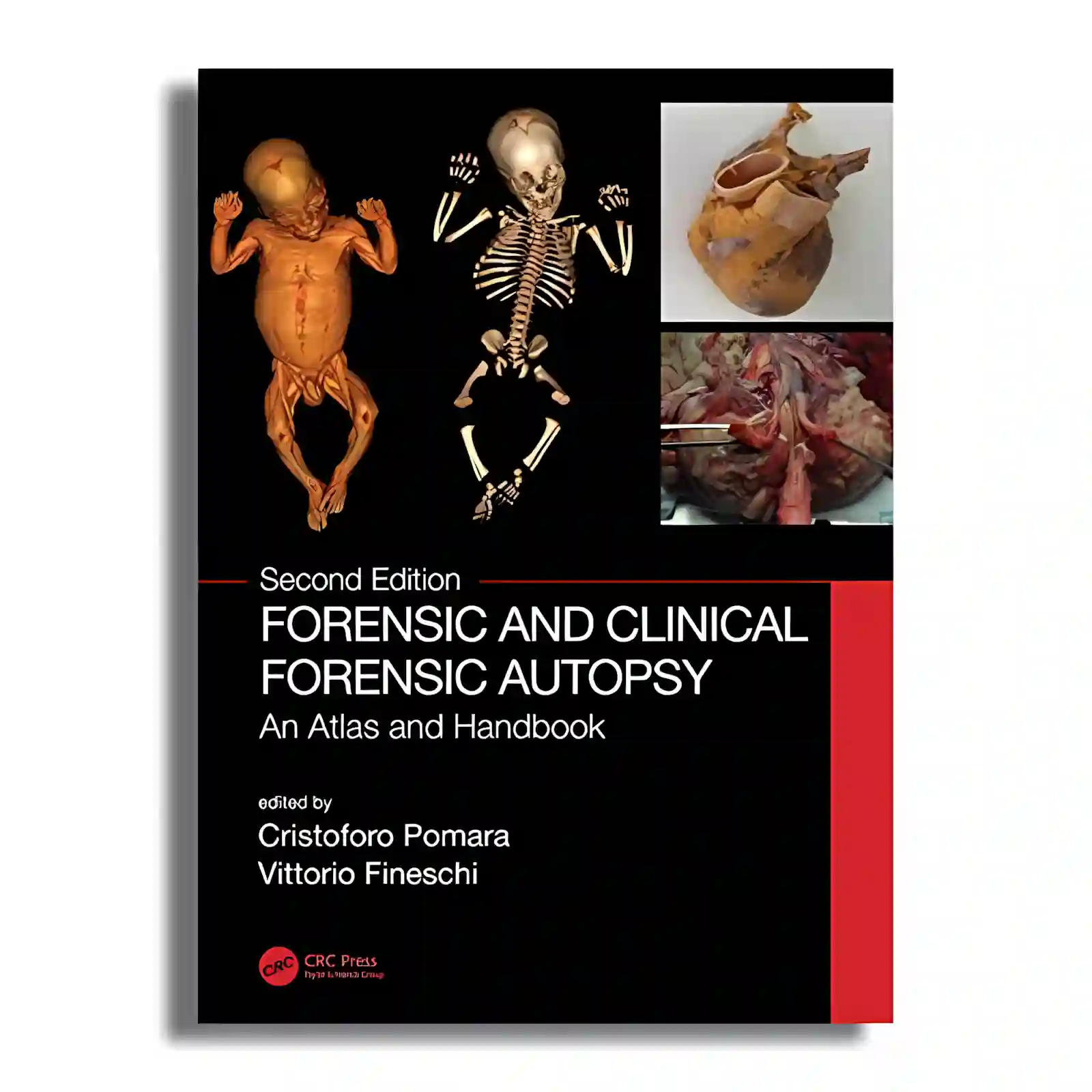
Forensic and Clinical Forensic Autopsy: An Atlas and Handbook, Second Edition is a comprehensive, photo-assisted reference that presents a systematic approach to the forensic autopsy, covering procedures from the initial examination through post-autopsy investigation and analysis.
The book emphasizes the importance of a complete and methodical examination of the entire body. By following standardized procedures, forensic practitioners can reduce the risk of overlooked findings and support more accurate assessments of the cause and circumstances of death.
Key Features
-
Step-by-Step Autopsy Guidance
Provides a structured approach to performing forensic autopsies consistently and systematically, from pre-autopsy assessment through post-autopsy procedures.
-
Extensive Visual Resources
Includes more than 550 detailed, full-color photographs illustrating techniques, findings, procedures, and practical forensic applications.
-
Comprehensive Whole-Body Examination
Addresses the examination of individual organs and body systems while emphasizing a systematic approach to the complete autopsy.
-
External Examination and Organ Removal
Covers external cadaver examination and established methods for organ removal and examination.
-
Laboratory Procedures
Explores laboratory investigations and techniques used to support forensic autopsy findings and establish the cause of death.
-
Microscopy Applications
Includes coverage of forensic applications of microscopy, with expanded material on histology and immunohistochemistry.
-
Advanced Imaging Techniques
Discusses imaging methods relevant to standardized pre- and post-autopsy examination and documentation.
-
Forensic Case Studies
Uses practical case studies to demonstrate forensic techniques, investigative approaches, and real-world applications.
-
Pediatric and Fetal Autopsies
Provides dedicated coverage of the specialized considerations involved in pediatric and fetal autopsy examinations.
-
Forensic Anthropology
Features expanded coverage of forensic anthropology and its role in forensic investigations.
-
Molecular Autopsy
Introduces molecular autopsy approaches, including investigations that may assist in identifying genetic causes of death.
-
Genetic and DNA Analysis
Addresses the assessment of genetic disease and the application of DNA-based diagnostic techniques in forensic investigations.
What’s New in the Second Edition
The second edition expands the scope of the book with updated and additional coverage of:
- Histology
- Immunohistochemistry
- Forensic anthropology
- Molecular autopsy
- Advanced imaging techniques
- Genetic disease assessment
- DNA diagnosis
- Laboratory procedures and forensic microscopy
Practical Learning Approach
The book combines macroscopic and microscopic approaches to forensic examination. Detailed protocols, photographic examples, and case-based discussions help readers understand how individual techniques contribute to a comprehensive autopsy investigation.
Its standardized approach is intended to support accurate documentation, thorough examination, and consistent application of forensic pathology principles.
Who Should Use This Book?
This reference is particularly suitable for:
- Forensic pathologists
- Pathologists
- Forensic pathology trainees
- Pathology students
- Medical students studying forensic medicine
- Forensic medicine professionals
- Researchers in forensic pathology
- Professionals involved in medicolegal death investigation
Summary
Forensic and Clinical Forensic Autopsy: An Atlas and Handbook, 2nd Edition provides a detailed and practical framework for conducting comprehensive forensic autopsies. With extensive photographic documentation, standardized procedures, case studies, and expanded coverage of modern forensic techniques, it serves as a valuable reference for professionals and students developing expertise in forensic pathology and medicolegal investigation.