Format : 7 Videos (.mp4) + 47 Audios (.mp3) + 47 PDFs
Size: 43.18 GB
Release Year : 2025
Conference Overview :
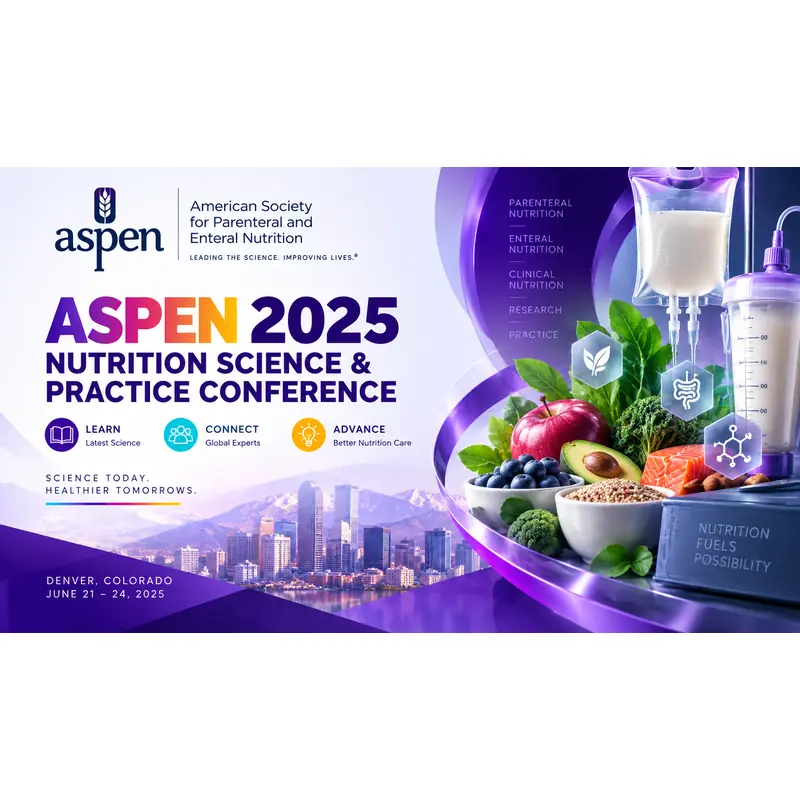
The American Society for Parenteral and Enteral Nutrition (ASPEN) Nutrition Science and Practice Conference 2025 provides a comprehensive educational program focused on the latest developments in clinical nutrition, parenteral and enteral nutrition, metabolic support, and nutrition care.
The conference explores emerging research, evidence-based clinical practices, malnutrition management, complex gastrointestinal conditions, pediatric and adult nutrition support, and the growing role of automation and artificial intelligence in clinical nutrition.
Course Year: 2025
2. Learning Objectives
Upon completion of the program, participants will be able to:
-
Apply evidence-based approaches to enteral and parenteral nutrition across diverse patient populations and clinical settings.
-
Identify, assess, and manage malnutrition using contemporary screening methods and the Global Leadership Initiative on Malnutrition (GLIM) framework.
-
Address complex gastrointestinal conditions, including intestinal failure and short bowel syndrome, through appropriate medical and nutritional interventions.
-
Evaluate the potential applications of automation and artificial intelligence in clinical nutrition practice.
-
Recognize and manage micronutrient deficiencies using contemporary assessment and treatment strategies.
-
Evaluate the appropriate use of elimination diets while considering their potential benefits and risks.
-
Apply current knowledge regarding GLP-2 therapies and weight-loss medications in nutrition support and patient management.
-
Improve nutrition support practices across critical care, oncology, pediatric, neonatal, and adult patient populations.
-
Incorporate research findings and emerging clinical evidence into nutrition care and decision-making.
3. Target Audience
This educational program is designed for healthcare professionals involved in nutrition assessment, nutrition support, and clinical care, including:
-
Registered dietitians and nutrition professionals
-
Physicians and medical specialists
-
Clinical nutrition practitioners
-
Healthcare professionals involved in enteral and parenteral nutrition
-
Professionals managing malnutrition and complex gastrointestinal disorders
-
Clinicians working with pediatric, neonatal, adult, geriatric, oncology, and critically ill populations
4. Key Topics and Educational Sessions
Clinical Nutrition and Malnutrition
-
Administrative Perspectives on Malnutrition: Benefits for Outcomes, Reimbursement, and Quality Metrics
-
Malnutrition Screening in Outpatient Cancer Centers: New Evidence for Clinical Recommendations
-
The Global Leadership Initiative on Malnutrition: A Practical Approach
-
Tackling Malnutrition in Hospitalized Children Using an Interprofessional Nutrition Care Pathway
-
Understanding Malnutrition in Children With Neurological Impairments Undergoing Surgery
-
Recognizing and Mitigating Sarcopenia Across Disease States
Parenteral Nutrition
-
A Clinician’s Guide to Parenteral Nutrition Compatibility and Stability
-
Parenteral Nutrition Delivery Across the Patient Care Spectrum
-
Optimizing Macronutrient Delivery in Parenteral Nutrition
-
Protocolized Management of Nutrition Support Complications
-
What Clinicians Should Know When Prescribing Home Parenteral Nutrition
-
Optimization and Complications of Parenteral Nutrition in Preterm Infants
Enteral Nutrition and Feeding Support
-
Navigating Common Feeding Tube Challenges and Complications
-
Myth-Busting Enteral Nutrition in the ICU: An Interprofessional Perspective
-
Pediatric Enteral Nutrition: A Hospital-Wide Approach
-
Addressing Feeding Problems, Including Avoidant/Restrictive Food Intake Disorder
-
Nutrition Support Across the Continuum of Life, From Neonates Through Adults
Critical Care Nutrition
-
Fueling the Critically Ill: Balancing Feeding Challenges and Individualized Nutrition
-
Improving Nutrition Interventions in the Critical Care Setting Through a Team-Based Approach
-
The ICU Clinician’s Guide to Nutrition Physiology: Latest Insights
-
Indirect Calorimetry for Determining Patient Nutritional Requirements
Gastrointestinal Disorders and Intestinal Failure
-
Case-Based Approaches to Treating Complex Gastrointestinal Patients
-
Intestinal Failure–Associated Liver Disease: Current Understanding and Future Perspectives
-
GLP-2 Use in the Management of Patients With Intestinal Failure
-
Health Equity Across the Intestinal Failure Care Continuum
-
The Story and Clinical Management of Short Bowel Syndrome
-
Nutrition Care for Patients With Complex Gastrointestinal Conditions
Pediatric and Neonatal Nutrition
-
Nutrition Management for Pediatric Patients Requiring Parenteral and Enteral Nutrition
-
Nutrition Support Updates in Pediatric Critical Care
-
Pediatric Enteral Nutrition Management in Hospital Settings
-
Nutrition Support Challenges Across Neonatal, Pediatric, and Adult Care
-
Parenteral Nutrition in Preterm Infants and Associated Complications
-
Nutrition Management for Children With Neurological Impairments
Micronutrients and Specialized Nutrition
-
Evaluating and Treating Micronutrient Deficiencies
-
Elimination Diets in Clinical Practice: Benefits, Risks, and Patient Considerations
-
Lipids in Clinical Medicine and Their Potential Therapeutic Applications
-
Nutrition Care for Patients With POTS, MCAS, and Ehlers-Danlos Syndrome
-
Nutrition Challenges in Oncology Patients
Weight Management and Emerging Therapies
-
Clinical Considerations for Nutrition Providers Managing Patients Using Weight-Loss Medications
-
GLP-2 Therapies and Their Application in Intestinal Failure
-
Contemporary Approaches to Metabolic and Nutritional Management
Research, Technology, and Innovation
-
Automation and Artificial Intelligence in Clinical Nutrition
-
Fundamentals of Clinical Nutrition Research and Critical Evaluation of the Literature
-
Novel Nutritional and Metabolic Status Biomarkers
-
Research Discoveries in Clinical Nutrition
-
Integrating Clinical Evidence Into Nutrition Practice
Nutrition Support Teams and Professional Practice
-
Strategies for Establishing, Engaging, and Sustaining Nutrition Support Teams
-
Evidence-Based Clinical Nutrition Practice and Implementation
-
Advances in Nutrition Support and the Evolution of Clinical Nutrition
-
Challenges and Opportunities in the Future of Clinical Nutrition
-
Social Media in Nutrition Support Education and Advocacy
5. Program Highlights
The 2025 program provides broad coverage of contemporary nutrition science and clinical practice, with particular emphasis on:
-
Evidence-based enteral and parenteral nutrition
-
Malnutrition screening and management
-
Critical care nutrition
-
Pediatric and neonatal nutrition support
-
Intestinal failure and short bowel syndrome
-
Gastrointestinal and oncology nutrition
-
Micronutrient assessment and treatment
-
Nutrition support complications
-
Clinical research and emerging biomarkers
-
Artificial intelligence and automation
-
GLP-2 and weight-loss medication considerations
-
Nutrition support team development
-
Implementation of evidence-based clinical practices
6. Why This Program Matters
The ASPEN Nutrition Science and Practice Conference 2025 offers healthcare professionals an opportunity to strengthen their knowledge of modern nutrition support and apply current evidence to complex clinical situations. The program addresses practical challenges encountered across the continuum of care while highlighting emerging research, technologies, therapies, and approaches that are shaping the future of clinical nutrition.