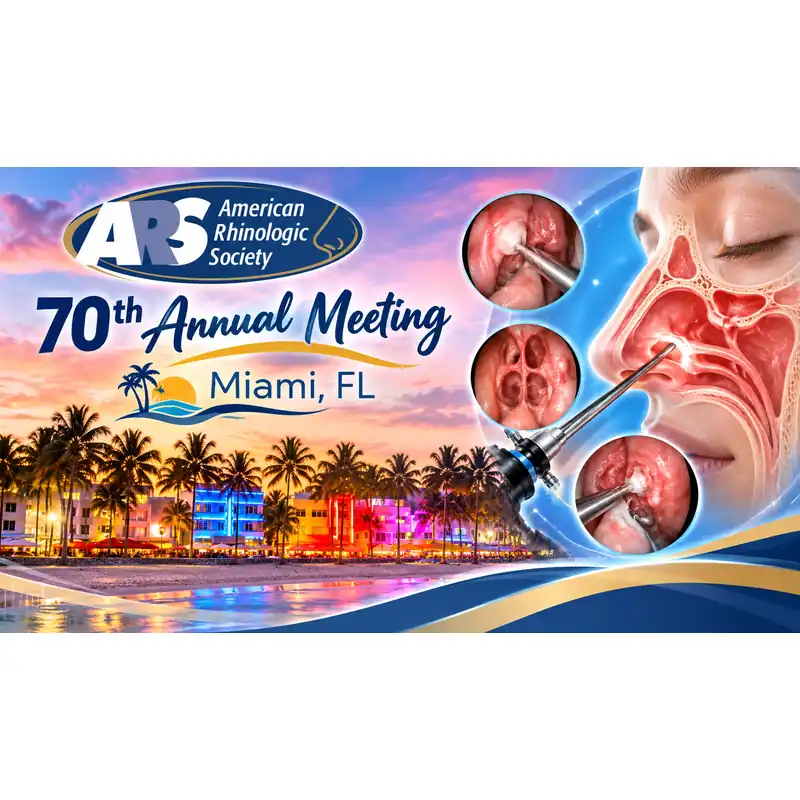
Held September 27–28, 2024, in Miami Beach, Florida, the meeting features a comprehensive scientific program focused on emerging research, clinical advances, surgical approaches, technology, and evolving strategies for the diagnosis and management of rhinologic disorders.
The program combines scientific presentations, expert panel discussions, research presentations, Q&A sessions, recognition of research contributions, and focused breakout sessions in rhinology and skull base surgery.
Program Highlights
Scientific Program
The scientific program explores advances in rhinology and sinus disease, including:
- Emerging research in rhinology and sinusology
- Artificial intelligence and machine learning in endoscopy and imaging
- Sinonasal pathology and malignancy
- Chronic rhinosinusitis
- Olfactory dysfunction and loss
- Inflammatory endotypes
- Sinonasal microbiology
- Novel drug and therapeutic development
- Endoscopic sinus surgery
- Skull base surgery
- Sinonasal cancer
- Emerging biologic and systemic therapies
- Innovative approaches to patient care
Research and Innovation
The meeting provides a platform for current research and emerging technologies, including:
- Machine learning applications in rhinology
- Deep learning for sinus CT imaging
- Artificial intelligence in disease prediction
- Novel drug development
- Stem cell therapy
- Nasal drug delivery
- Sinus stent technologies
- Platelet-rich plasma therapy
- Sinonasal cancer research
- Inflammatory disease research
- Olfactory dysfunction research
Networking and Professional Development
The annual meeting provides opportunities for professionals to:
- Connect with colleagues in rhinology and sinus surgery
- Exchange clinical and research perspectives
- Discuss emerging approaches to patient care
- Explore developments in rhinologic science
- Build professional relationships within the specialty
- Engage with current research and clinical innovation
Research Recognition
The program includes recognition of outstanding research and professional contributions, including awards and acknowledgments for research and peer-review activities.
Educational Focus
Chronic Rhinosinusitis
The program examines current research and clinical approaches to chronic rhinosinusitis, including:
- Disease pathophysiology
- Inflammatory endotypes
- Type 2 and non-Type 2 inflammation
- Microbial community changes
- Postoperative outcomes
- Medical and surgical management
- Systemic therapies
- Long-term outcomes following endoscopic sinus surgery
Olfactory Dysfunction
Topics include:
- Postviral olfactory loss
- Long COVID and olfactory dysfunction
- Olfactory cleft disease
- Imaging findings associated with olfactory outcomes
- Intranasal steroid treatment
- Emerging approaches to olfactory restoration
Artificial Intelligence and Imaging
The meeting explores applications of artificial intelligence and advanced imaging in rhinology, including:
- Machine learning in endoscopy
- Deep learning for CT assessment
- Automated evaluation of frontal sinus opacification
- Artificial intelligence in sinonasal disease prediction
- Imaging approaches for disease recurrence
- Data-driven approaches to clinical decision-making
Sinonasal Inflammatory Disease
Educational content addresses the evolving understanding and treatment of inflammatory sinonasal disorders.
Topics include:
- Chronic rhinosinusitis with nasal polyps
- Inflammatory endotypes
- Type 2 inflammation
- Non-Type 2 inflammation
- Cytokine pathways
- Allergic disease
- Allergen immunotherapy
- Postoperative inflammatory management
- Emerging systemic therapies
Skull Base and Advanced Endoscopic Surgery
The dedicated skull base program examines contemporary approaches to complex sinonasal and skull base conditions.
Topics include:
- Endoscopic skull base surgery
- Functional endoscopic sinus surgery
- Skull base reconstruction
- Cerebrospinal fluid leak management
- Surgical complications
- Frontal sinus approaches
- Maxillary sinus approaches
- Orbital decompression
- Sinonasal malignancy
- Olfactory neuroblastoma
- Sinonasal squamous cell carcinoma
- Endoscopic approaches to skull base tumors
Surgical Outcomes and Complications
The program reviews factors affecting surgical outcomes, including:
- Complications following functional endoscopic sinus surgery
- Postoperative outcomes
- Anticoagulant therapy and surgery
- Timing of cerebrospinal fluid leaks
- Long-term outcomes following endoscopic sinus surgery
- Reconstruction techniques
- Social vulnerability and quality of life
- Imaging and endoscopic surveillance
Sinonasal Malignancy
The meeting addresses contemporary diagnosis and management of sinonasal malignancies, including:
- Sinonasal squamous cell carcinoma
- Olfactory neuroblastoma
- Tumor recurrence
- Molecular and mutational characteristics
- Pathologic dural invasion
- Survival outcomes
- Endoscopic surgical approaches
- Systemic therapies
- Induction chemotherapy
- Upfront surgery
- Post-treatment surveillance
Featured Scientific Topics
The scientific program includes research and presentations addressing:
Rhinology Research
- Chronic rhinosinusitis research and future directions
- Sinonasal microbial communities
- Inflammatory disease mechanisms
- Cystic fibrosis and rhinosinusitis
- Olfactory dysfunction
- Long COVID
- Novel therapeutic strategies
Therapeutic Development
- Drug development from discovery through clinical application
- Sinus stent technologies
- Steroid-eluting treatments
- Intranasal therapies
- Stem cell approaches
- Nasal drug delivery systems
Advanced Diagnostics
- Artificial intelligence in endoscopy
- Machine learning
- Deep learning
- CT-based disease assessment
- Sinonasal pathology
- Imaging surveillance
- Automated radiologic evaluation
Featured Research and Clinical Discussions
The program includes discussions and presentations covering:
- AI-based prediction of sinonasal disease progression
- Sinonasal pathology and cancer prediction
- Effects of environmental exposure on type 2 inflammation
- Long-term outcomes of treatment for postviral olfactory loss
- Minimally invasive nasal drug delivery
- Chronic rhinosinusitis research and patient care
- Sinus microbial changes
- Steroid-eluting sinus stents
- Allergen immunotherapy following surgery
- Therapeutic sinus stent applications
- Autonomic dysfunction and olfactory loss
- Immunophenotyping in invasive fungal sinusitis
- Inflammatory endotypes in chronic rhinosinusitis with nasal polyps
- Olfactory cleft disease
- Nasal IL-5 and chronic rhinosinusitis
- Cystic fibrosis carrier status and chronic rhinosinusitis
- Empty nose syndrome
- PAR2 and inflammatory pathways
- Emerging systemic therapies for sinonasal malignancy
Target Audience
The American Rhinologic Society 70th Annual Meeting is designed for professionals involved in rhinology, sinus surgery, otolaryngology, and related research fields.
The target audience includes:
- Otolaryngologists and ENT specialists
- Rhinologists
- Sinus surgeons
- Skull base surgeons
- Physician assistants
- Advanced practice providers in ENT
- Medical researchers
- Academic researchers
- Otolaryngology residents
- Otolaryngology fellows
- Healthcare professionals involved in rhinologic patient care
Professional Education in Rhinology
The American Rhinologic Society 70th Annual Meeting provides a broad educational overview of contemporary rhinology and sinus surgery. Through scientific presentations, clinical research, panel discussions, Q&A sessions, and specialized skull base content, the program addresses both established clinical approaches and emerging developments in the field.
The curriculum encompasses chronic rhinosinusitis, inflammatory sinonasal disease, olfactory dysfunction, endoscopic sinus surgery, skull base surgery, sinonasal malignancy, artificial intelligence, advanced imaging, drug development, and innovative therapeutic technologies.
The meeting is designed to support continued professional education while providing a forum for scientific exchange, research recognition, collaboration, and discussion of the future of rhinology and sinus surgery.