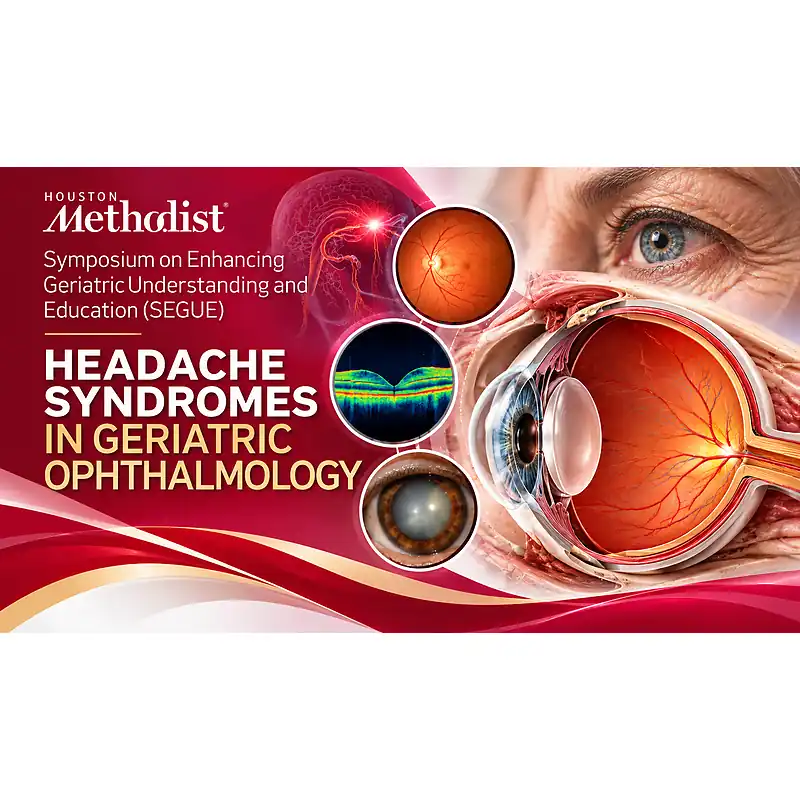
Program Overview
The symposium addresses important issues in geriatric ophthalmology and the broader care of aging patients, including:
- Headache syndromes in older adults
- Giant cell arteritis and associated visual complications
- Acute vision loss
- Glaucoma and ophthalmic emergencies
- Age-related macular degeneration
- Vision rehabilitation
- Functional vision and independence
- Complex neurologic and ophthalmic conditions
- Medication-related ophthalmic considerations
- Falls and postoperative complications
- Geriatric comorbidities
- Multidisciplinary care of older adults
Geriatric Ophthalmology and the Aging Population
The aging population presents unique challenges for eye care professionals because many major ophthalmic diseases disproportionately affect older adults.
The symposium highlights the importance of understanding how aging, comorbidities, medications, functional limitations, and cognitive changes can influence:
- Diagnosis
- Treatment selection
- Surgical decision-making
- Treatment adherence
- Prognosis
- Rehabilitation
- Patient safety
- Quality of life
The program emphasizes the importance of collaboration between ophthalmologists, optometrists, geriatricians, internists, family practitioners, nurses, rehabilitation specialists, and other healthcare professionals.
Learning Objectives
Upon completion of the program, participants should be better able to:
Glaucoma in Older Adults
- Describe important glaucoma-related considerations in elderly patients.
- Identify compliance challenges associated with glaucoma treatment in older adults.
- Develop strategies to improve short-term and long-term treatment adherence.
- Recognize the potential impact of polypharmacy on treatment and patient safety.
Ophthalmic Surgery in Older Adults
- Discuss medical considerations when evaluating older adults for ophthalmic surgery.
- Identify situations in which surgery may or may not be appropriate.
- Address informed consent considerations in elderly patients.
- Recognize postoperative risks, including falls and fractures.
- Incorporate age-related health and functional factors into surgical decision-making.
Age-Related Macular Degeneration
- Discuss current approaches to the management of age-related macular degeneration.
- Review emerging and evolving treatment options.
- Understand the role of vitamin therapy when appropriate.
- Recognize when patients may benefit from low-vision services.
- Address the functional impact of vision loss in older adults.
Program Topics
Headache and Neuro-Ophthalmic Conditions
Giant Cell Arteritis and Malignancy
Evaluation of complex headache presentations in older adults, including:
- Headache assessment
- Jaw claudication
- Diplopia
- Giant cell arteritis
- Differentiation of potentially serious underlying conditions
- Avoiding diagnostic delays and misdiagnosis
Idiopathic Intracranial Hypertension After Venous Sinus Stenting
Review of chronic headache and intracranial hypertension following venous sinus intervention, including:
- Recognition of persistent or recurrent headache
- Potential complications following venous sinus stenting
- Stent thrombosis
- Intracranial hypertension
- Diagnostic considerations
Headache in Older Adults
A focused discussion of headache evaluation and management in the geriatric population, including:
- Headache assessment in older adults
- Secondary headache considerations
- Occipital nerve-mediated pain
- Diagnostic evaluation
- Management strategies
Papilledema in Hemodialysis
Evaluation of papilledema and intracranial hypertension in patients receiving hemodialysis, including:
- Recognition of papilledema
- Intracranial pressure considerations
- Arteriovenous graft complications
- Graft thrombosis
- Diagnostic evaluation and management
Ophthalmic Emergencies and Vision-Threatening Conditions
Giant Cell Arteritis With Acute Vision Loss
Review of acute vision loss associated with giant cell arteritis, with emphasis on:
- Recognition of giant cell arteritis
- Acute visual symptoms
- Choroidal ischemia
- Differential diagnosis
- Avoiding misdiagnosis
- Urgent clinical evaluation
Acute Angle-Closure Glaucoma
A practical review of recognizing and managing this ophthalmic emergency.
Topics include:
- Clinical warning signs
- Acute angle-closure glaucoma
- Emergency evaluation
- Initial management considerations
- Recognition of vision-threatening complications
Vision Rehabilitation and Functional Independence
Occupational Therapy Vision Rehabilitation
Focus on strategies for optimizing functional vision and quality of life in older adults.
Topics include:
- Functional vision assessment
- Occupational therapy approaches
- Vision rehabilitation
- Adaptation to visual impairment
- Improving daily functioning
- Quality-of-life considerations
Vision Rehabilitation in the Elderly
A comprehensive approach to maintaining independence in older adults experiencing vision loss.
Topics include:
- Functional vision
- Independence and daily activities
- Low-vision strategies
- Rehabilitation approaches
- Patient-centered care
- Quality-of-life improvement
- Multidisciplinary support
Complex Ophthalmic and Neurologic Conditions
Rheumatoid Arthritis-Associated Scleritis
Review of ocular inflammation and its differentiation from medication-related or neurologic findings.
Topics include:
- Rheumatoid arthritis-associated ocular disease
- Scleritis
- Ocular inflammation
- Pharmacologic anisocoria
- Clinical differentiation
- Diagnostic considerations
Trigeminal Neuralgia and Anesthesia Dolorosa
Discussion of persistent facial pain following radiofrequency treatment, including:
- Trigeminal neuralgia
- Radiofrequency ablation
- Anesthesia dolorosa
- Recognition of treatment-related neuropathic pain
- Diagnostic considerations
- Management strategies
Ophthalmology Practice and Healthcare Delivery
Practice Consolidation and Private Equity in Ophthalmology
An examination of evolving healthcare practice models and their potential impact on eye care delivery.
Topics include:
- Practice consolidation
- Private equity in ophthalmology
- Changing ophthalmology practice structures
- Healthcare delivery models
- Implications for ophthalmic practices and patient care
Target Audience
The symposium is designed for healthcare professionals involved in the care of older adults and patients with ophthalmic conditions.
The target audience includes:
- Ophthalmologists
- Optometrists
- Geriatricians
- Internists
- Family practitioners
- Ophthalmology residents
- Ophthalmology fellows
- Physician assistants
- Registered nurses
- Advanced practice nurse practitioners
- Allied health professionals
- Healthcare professionals with an interest in geriatric ophthalmology
Comprehensive Geriatric Ophthalmology Education
The Houston Methodist 14th Annual Symposium on Enhancing Geriatric Understanding and Education (SEGUE) provides a multidisciplinary educational approach to the complex needs of the aging patient.
The program combines geriatric medicine, ophthalmology, neuro-ophthalmology, vision rehabilitation, headache evaluation, glaucoma, age-related macular degeneration, ophthalmic emergencies, and functional care.
Through case-based clinical discussions and focused educational sessions, participants gain practical perspectives on recognizing serious conditions, improving treatment adherence, making informed surgical decisions, addressing vision-related functional limitations, and coordinating care for older adults.
The symposium emphasizes the importance of safe, effective, compassionate, and multidisciplinary care as the healthcare system responds to the growing needs of an aging population.