Format : PDF
Release Year : 2026
Overview :
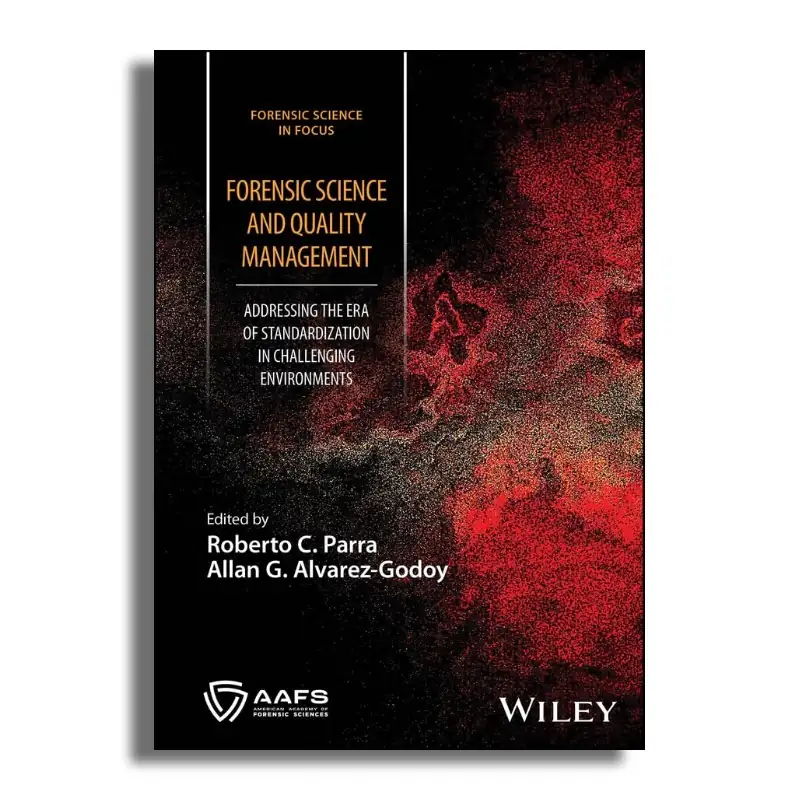
Forensic Science and Quality Management: Addressing the Era of Standardisation in Challenging Environments explores how international standards and quality management systems can be implemented effectively across diverse forensic science settings, including regions affected by political instability, economic challenges, limited resources, and humanitarian crises.
As forensic science increasingly adopts global standards to improve reliability, transparency, and professional consistency, this book examines the practical and ethical challenges of applying these frameworks in complex environments. Through expert analysis and international case studies, it highlights the importance of balancing scientific accuracy with ethical responsibility, cultural awareness, and respect for human rights.
The book brings together theoretical perspectives, practical experiences, and emerging technologies to examine how forensic professionals can strengthen institutional credibility, improve investigative practices, and contribute to justice and accountability.
Key Topics Covered
-
Global Forensic Standards: Examines how international standards can be adapted to different social, political, economic, and institutional environments.
-
Quality Management Systems: Explores the implementation of quality assurance frameworks, laboratory accreditation, and procedures designed to improve forensic reliability.
-
International Case Studies: Draws on real-world examples from Latin America, Africa, and other regions affected by conflict, instability, and resource limitations.
-
Advanced Forensic Technologies: Discusses the application of DNA analysis, artificial intelligence, and other technologies in modern forensic investigations.
-
Ethics and Human Rights: Highlights the importance of ethical decision-making, victims' dignity, and human rights protection in forensic practice.
-
Accreditation and Institutional Development: Examines the relationship between formal accreditation requirements and meaningful improvements in institutional capacity.
-
Transitional Justice and Accountability: Explores the contribution of forensic science to investigating human rights violations, addressing impunity, and supporting accountability.
Why This Book Matters
Standardisation is essential for promoting consistency and scientific reliability in forensic science, but applying uniform procedures does not automatically guarantee fair or effective outcomes. This book challenges the assumption that compliance alone is sufficient, emphasising the need for context-sensitive approaches that account for local realities and institutional limitations.
By highlighting how forensic professionals maintain scientific integrity while working under challenging conditions, the book provides valuable insights into building credible forensic systems that serve justice, protect human rights, and support victims and affected communities.
Who Should Read This Book?
This book is particularly relevant to:
-
Forensic scientists and laboratory professionals
-
Criminologists and criminalistics specialists
-
Legal practitioners and criminal justice professionals
-
Human rights investigators and humanitarian practitioners
-
Transitional justice researchers and practitioners
-
Policymakers and institutional decision-makers
-
Researchers and postgraduate students in forensic science, law, criminal justice, human rights, humanitarian action, and social sciences
Key Benefits
-
Develops an understanding of international forensic standards and their practical application.
-
Explores the challenges of maintaining quality in resource-constrained and unstable environments.
-
Examines the role of ethics and human rights in reliable forensic practice.
-
Provides international perspectives on accreditation and institutional strengthening.
-
Explains how forensic science can support justice, accountability, and the fight against impunity.
Conclusion
Forensic Science and Quality Management: Addressing the Era of Standardisation in Challenging Environments offers a critical examination of the relationship between global standards, scientific quality, ethical responsibility, and justice. By connecting international frameworks with real-world challenges, it provides an important resource for professionals, researchers, and students seeking to understand and strengthen forensic science practices across diverse and complex environments.